Published on 8 June 2026

Bad credit doesn't have to mean the end of the road for your funding plans. UK businesses secure finance every day despite impaired credit histories, and this guide explains exactly how it works, what lenders look for, and what you can do right now to improve your chances.
Can I Get a Business Loan with Bad Credit? (Quick Answer)
Yes. UK small business owners can often still get a business loan with bad credit, particularly through specialist and alternative lenders or brokers like Enable Finance. Bad credit business loans help companies with poor credit scores access the capital they need to keep trading and growing.
Approval is harder than with good credit, but options exist for both established SMEs and early-stage firms. These include unsecured business loans, secured facilities, invoice finance and short-term bridging. Many lenders now focus on recent trading performance, cash flow and affordability rather than dwelling solely on historic credit issues.
To improve your chances right now:
- Request a realistic loan amount that's proportional to your turnover
- Prepare up-to-date bank statements covering the last 6–12 months
- Write a clear statement explaining what the funds will be used for
- Use a broker to compare multiple lenders and avoid unnecessary hard searches
The rest of this article explains how bad credit business loans work in the UK, what lenders look for during the application process, the funding options available, and how Enable Finance can help you secure finance quickly.
What Is a Bad Credit Business Loan?
A bad credit business loan is a lending facility designed for companies or directors whose credit history would normally disqualify them from mainstream funding. These loans are structured to account for higher risk, and many lenders now specialise in exactly this space.
These loans can be secured or unsecured and include term loans, bridging loans, merchant cash advances, and invoice finance facilities. Business credit cards also offer flexible repayment options for businesses that need revolving access to funds. You can usually borrow between £2,000 and £250,000, though some specialist lenders offer up to £500,000 depending on security and turnover.
Key differences from standard business loans:
- Higher interest rates and arrangement fees
- Tighter borrowing limits relative to turnover
- More detailed checks on cash flow and affordability
- Personal guarantees often required from directors
- Stricter loan terms and shorter repayment windows
These loans can still be used for most business purposes: working capital, VAT or tax liabilities, equipment, marketing, or premises. And when structured properly, consistent repayments can improve your credit score over 12–36 months, helping rebuild both business and director profiles.

What Counts as "Bad Credit" for UK Business Loans?
There is no single definition of bad credit. Each lender sets its own eligibility criteria, but there are common benchmarks across major UK credit reference agencies. A poor credit score limits borrowing options and increases interest rates across the board.
Typical score bands that lenders treat as adverse:
- Experian consumer scores below 640 are classed as "poor" or "very poor"
- Equifax ratings below 438 fall into the "poor" risk band
- Experian business credit scores below 25 out of 100 indicate high risk
- TransUnion scores in the lower bands also trigger closer scrutiny
Credit events that commonly concern lenders include County Court Judgments (CCJs), defaults, missed payments on loans or a business credit card, high credit utilisation, and previous insolvency procedures such as CVAs, pre-pack administration, or liquidation. High street banks heavily use automated credit scorecards, which means these events often trigger automatic declines.
For small businesses, sole traders and start ups, lenders frequently check the personal credit score of directors and partners, especially where limited business credit history exists. Alternative lenders, including those accessed via Enable Finance, often place more weight on current business performance and bank statement data than on an old low score.
Before applying, check your own business and personal credit report with Experian, Equifax and TransUnion, and correct errors on your credit report to improve your score.
How Lenders Assess a Business Loan with Bad Credit
When your credit rating is poor, lenders look beyond the score to build a full picture of risk and affordability. Lenders assess affordability and credit scores before lending, but the score alone rarely tells the whole story.
Main factors UK lenders typically assess:
- Recent turnover over the last 6–12 months, ideally showing stability or growth
- Average monthly inflows and outflows from the business bank account
- Existing debts, commitments and HMRC liabilities
- Sector risk - hospitality and construction face more scrutiny than professional services
- Trading history: you need to show at least two years of trading history for many products, though some specialist lenders accept shorter records
- Showcasing consistent revenue improves chances of loan approval significantly
Lenders will examine bank statements, filed accounts, management accounts and VAT returns to understand whether monthly repayments are realistic. Specialist lenders use Open Banking data to review transactions, giving them a live view of your finances rather than relying on dated paperwork.
Some loans require personal guarantees from directors with 20%+ shareholding, while others may be secured against commercial property, equipment or unpaid invoices. Different products have different underwriting approaches: unsecured business loans lean on cash flow data, bridging loans focus on asset value and exit strategy, and invoice factoring assesses the strength of your customers.
Enable Finance uses AI-powered sourcing tools to match your credit profile, sector and funding need with UK lenders comfortable with that level of risk, reducing time spent on unsuitable applications.
Business Loan Options If You Have Bad Credit
Bad credit doesn't mean only one type of loan. Different structures suit different situations, and understanding your business loan options helps you find the right loan for the job. Many online lenders consider lower credit scores for approval than traditional banks would.
- Unsecured business loans - No collateral required, but unsecured loans do not require collateral but have stricter eligibility. Lenders lean heavily on trading strength and typically cap terms at 6–36 months. These suit small businesses needing quick working capital.
- Secured loans and bridging loans - Secured loans use assets as collateral to reduce the lender's risk. If you own commercial property, equipment or other valuable assets, secured lending can unlock larger amounts at lower rates. Bridging loans are short-term, property-backed facilities with monthly interest rates rather than annual percentage rate pricing.
- Invoice finance and factoring - Invoice Finance unlocks cash from unpaid B2B invoices, advancing 70–90% of invoice value upfront. Invoice factoring focuses on customer creditworthiness over business credit, making it a strong option post-insolvency or after a CVA where traditional banks will not lend.
- Merchant cash advances - Merchant cash advances are based on future credit card sales, with repayments scaling alongside your revenue, making them a form of emergency business finance when rapid access to working capital is needed. Useful for retailers and hospitality businesses but typically expensive.
- Asset finance - Asset Finance lets businesses spread the cost of specific equipment, using the asset itself as security. This can offer lower rates than unsecured bad credit loans or unsecured bridging facilities.
- Revolving credit and overdrafts - Limited availability for poor credit borrowers, but some challenger banks and fintechs offer overdraft-style products.
Enable Finance can help compare these different product types side by side, so you don't have to research dozens of lenders individually.
Can Start Ups Get a Business Loan with Bad Credit?
Getting a start up loan with bad credit is harder, because there's no trading history and many lenders rely heavily on the individual's personal credit score and business plan. But it's not impossible.
Main UK avenues for start ups:
- Government-backed Start Up Loans - Borrow between £500 and £25,000 per person at a fixed interest rate of 7.5% per annum, plus free mentoring. This government backed scheme requires a credit check and may reduce amounts or decline where there are very recent defaults or insolvency, but a bad credit score doesn't automatically mean refusal. Businesses must be registered in the UK to qualify.
- Personal loans for business use - Some founders use personal loans to fund early operations, though this carries personal risk.
- Small secured loans - Backed by property, savings or other business assets.
- Equity or friend-and-family funding - Where credit issues matter less, but ownership dilution is the trade-off.
A solid business plan and cash flow projections can mitigate credit history issues. Lenders want to see a personal survival budget and realistic forecasts showing how monthly repayments will be met in the first 12–24 months. Applying for smaller loan amounts increases approval chances, and staged funding - raising smaller tranches as milestones are hit - helps control risk for both lender and borrower.
Enable Finance can sometimes help pre-revenue or early-stage firms access specialist funding, including equipment finance, even when previous credit issues exist. This is a growing business area across our lender panel.

How to Improve Your Chances of Approval with Bad Credit
You can't rewrite your credit history, but you can present your business in the strongest possible light before submitting a business loan application. Here are the practical steps that make a real difference.
- Reconcile your accounts - Prepare up-to-date management figures and ensure your Companies House filings are current. Lenders notice when filings are overdue.
- Organise bank statements - Provide the last 6–12 months from a dedicated business bank account. If you're still trading from a personal account, open a separate one now. This makes it far easier for lenders and platforms like Enable Finance to assess cash flow.
- Reduce recent credit applications - Limit loan applications to avoid negative credit impacts. Each hard search leaves a mark and multiple applications in a short window signal desperation to lenders.
- Pay bills on time - Paying bills on time boosts your credit score. Even small improvements over 3–6 months before applying can shift your rating.
- Keep credit utilisation below 25% - Whether on a business credit card or overdraft, low utilisation signals that you can borrow money responsibly.
- Offer security or a personal guarantee - Providing a personal guarantee can improve loan approval chances, though it puts personal assets at risk.
- Write a simple repayment plan - Explain how much you want to borrow, what it will be used for, and how it will generate or protect revenue.
Working with a broker such as Enable Finance reduces the need for multiple hard searches, because we pre-screen lenders and use soft checks or bank-statement driven assessments first.
Costs, Terms and Monthly Repayments on Bad Credit Business Loans
Bad credit loans cost more than mainstream business loans. High-interest rates and additional fees are common for loans for poor credit, so understanding the total cost before committing is essential.
Typical cost ranges for UK adverse-credit borrowers:
- Unsecured loans - APRs commonly range from 30–70%, compared with 6–12% for borrowers with clean credit. That's 4–6 times more expensive.
- Bridging loans - Monthly interest rates of 0.85–1.5% for bad credit cases, versus 0.45–0.75% for clean profiles. Arrangement fees typically run 1–2%.
- Additional costs - Valuation fees, legal fees, and exit fees (0–1%) can add up across secured products.
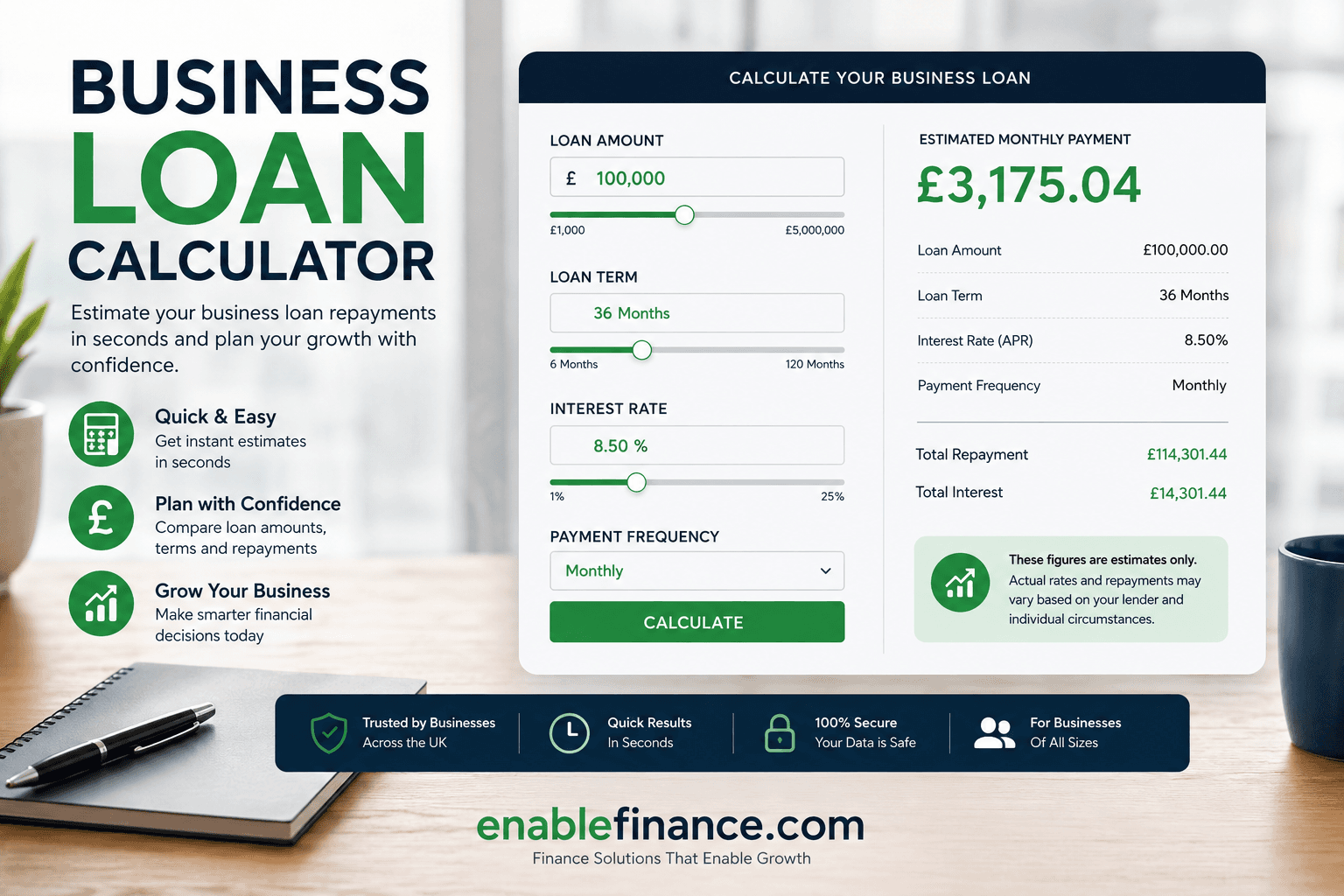
Worked example: Borrowing £30,000 unsecured over 24 months at roughly 50% APR could mean monthly repayments of around £1,350–£1,400 and a total repayable of approximately £33,000 in interest alone on top of the principal. These loans typically have higher interest rates than standard loans, and the difference is significant.
Lenders assess affordability by comparing projected repayments against average monthly surplus cash in your business bank account over the last 6–12 months. Lenders may require a personal guarantee for bad credit loans, adding a personal layer of security for the lender.
There's a clear trade-off between longer terms (lower monthly repayments but more interest overall) and shorter terms (higher monthly repayments but lower total cost). Some facilities offer weekly or daily repayments matched to card sales, which suit retailers and hospitality businesses with seasonal turnover.
Enable Finance helps borrowers compare not just the advertised rate but the total cost and impact on cash flow across different lenders.
Alternatives to a Bad Credit Business Loan
Sometimes a conventional business loan isn't the best answer. Alternative finance or support may be cheaper or easier to obtain even with a poor credit score, and it's worth considering every funding option before committing.
- Government grants - These usually don't depend on credit scores but have strict eligibility criteria, often focused on innovation, regional development or specific sectors. They don't require repayment.
- Equity investment - Angels, venture capital or crowdfunding. Credit issues matter less here, but you give up ownership.
- Invoice factoring - Lets you unlock cash from unpaid invoices, which can be particularly useful for firms trading after a CVA or pre-pack administration as part of a wider business recovery strategy. Lenders care about your customers' credit, not yours.
- Asset finance - May offer lower rates than an unsecured bad credit loan when purchasing equipment, because the asset itself provides security. Secured loans require valuable assets as collateral but open up better pricing, especially when implementing invoice factoring alongside asset finance as part of a broader funding strategy.
- Merchant cash advances - Flexible but expensive. Repayment scales with revenue, supporting businesses through quieter trading periods.
- Community Development Financial Institutions - Community Development Financial Institutions often assist borrowers with poor credit, offering funding where traditional lenders and high street banks won't.
Enable Finance specialises in arranging invoice finance, asset-backed facilities and post-insolvency funding for UK based businesses, which can be more appropriate than a simple term loan in many bad credit cases, and we can help you choose the right invoice factoring company when this is the most suitable option. Traditional funding routes may say no, but alternatives rarely run out entirely.
How Enable Finance Helps UK Businesses with Bad Credit
Enable Finance is a UK-based fintech and commercial finance brokerage that works specifically with SMEs, finance brokers and lenders to source funding even after credit problems or insolvency. We support businesses across sectors and at every stage of recovery.
Our platform uses AI-powered sourcing software to scan multiple specialist lenders at once, matching your sector, trading history and credit profile to appropriate loan options. This means we can identify lenders whose risk appetite fits your situation - even when traditional banks have said no.
The typical journey for a business with bad credit approaching Enable Finance:
- Initial conversation or online enquiry via a simple application form
- Share recent bank statements, accounts and key trading data
- Soft credit check or bank-data assessment - soft credit checks do not affect your credit score
- Presentation of tailored options, showing rates, terms and total repayable
We arrange unsecured business loans, secured and bridging loans, invoice factoring, working capital lines, and funding for companies emerging from CVAs or pre-pack administration.
Compared with approaching a single bank, working with us offers a higher chance of approval, the ability to compare structures and costs, and less risk of damaging your credit file with multiple hard searches. Hard credit checks leave a mark on your credit report, so minimising them matters.
Ready to explore your options? Contact Enable Finance or submit your details online to find out what business loan options are available - without any negative impact on your credit file.
FAQs: Getting a Business Loan with Bad Credit in the UK
How quickly can I get funds if I have bad credit? Some specialist lenders make decisions within 24–72 hours once documentation is submitted. Unsecured facilities and merchant cash advances can complete within days, while bridging loans typically take 5–15 working days depending on security and legal requirements.
Will applying for a business loan damage my credit score? Applying for a loan can negatively impact your credit score if a hard search is performed. Using a broker like Enable Finance, which uses soft checks first, helps you avoid unnecessary marks on your credit report. This is important because many lenders run hard searches the same way during the application process.
Can I get a business loan if I've been in a CVA or pre-pack administration? Mainstream banks typically decline, but specialised post-insolvency lenders accessed via Enable Finance may still consider applications. You'll need to demonstrate profitable trading since the insolvency event and usually provide security or a personal guarantee.
Do I need a personal guarantee? In most adverse-credit cases, yes. Lenders use guarantees to offset the lender's risk. If you can offer security against many assets or property, some lenders may reduce or waive the guarantee requirement, but personal liability remains common.
Can a bad credit business loan improve my credit score? Yes. Consistent repayments can improve your credit score over time. Making all payments on schedule is reported to credit reference agencies and gradually strengthens both personal and business credit files over 12–24 months. National newspapers and finance publications regularly cite on-time repayment as the single most effective way for medium sized businesses and sole traders to rebuild their credit rating.